Here is the question we get on almost every call with an importing brand right now. My landed cost went up, my packages are sitting in customs, and I do not know what to do about it. What changed?
What changed is that the rule most cross-border ecommerce was quietly built on is gone. If you were shipping product straight from a factory or an overseas warehouse to your customer's doorstep, that model does not work the way it used to.
This post lays out what actually happened, what it costs you, and when it makes sense to stop shipping across an ocean one order at a time and start holding inventory here instead. No sales pitch in the middle. Just an operator's view.
What actually changed
For years, shipments valued under 800 dollars entered the United States duty free under what is called the de minimis exemption. It was a simple rule with a huge effect. A brand could ship a single parcel from overseas, clear it on basic manifest data, and pay nothing in duty.
That went away in stages:
- May 2, 2025: the exemption was removed for goods from China and Hong Kong.
- August 29, 2025: the exemption was suspended globally, for every country of origin.
- July 1, 2027: the permanent statutory repeal takes full effect under the One Big Beautiful Bill Act.
So this is not a temporary policy wobble you can wait out. The direction is set. Every shipment now goes through formal or informal customs entry and gets assessed duties, taxes, and fees, no matter what it is worth.
The cost is real, but the delay is what actually hurts
The duty is the part everyone sees first. Depending on your product classification and country of origin, it can add a meaningful percentage to your landed cost, and there are broker fees on top of that. Every brand has run that math by now.
The part brands underestimate is time. Under the old rule, low value parcels cleared in hours. Now they need a commercial invoice, a ten-digit tariff classification, and a licensed customs broker, and clearance is measured in days. When you are shipping one order at a time from overseas, you are paying that clearance tax on every single package, and your customer is waiting through it.
That is the real problem. You cannot promise two-day delivery on a package that has to clear customs after the customer clicks buy.
The math moved in favor of holding inventory here
Before, splitting your inventory across the ocean was fine. Small parcels cleared cheaply and quickly, so there was no strong reason to commit capital to a domestic inventory position.
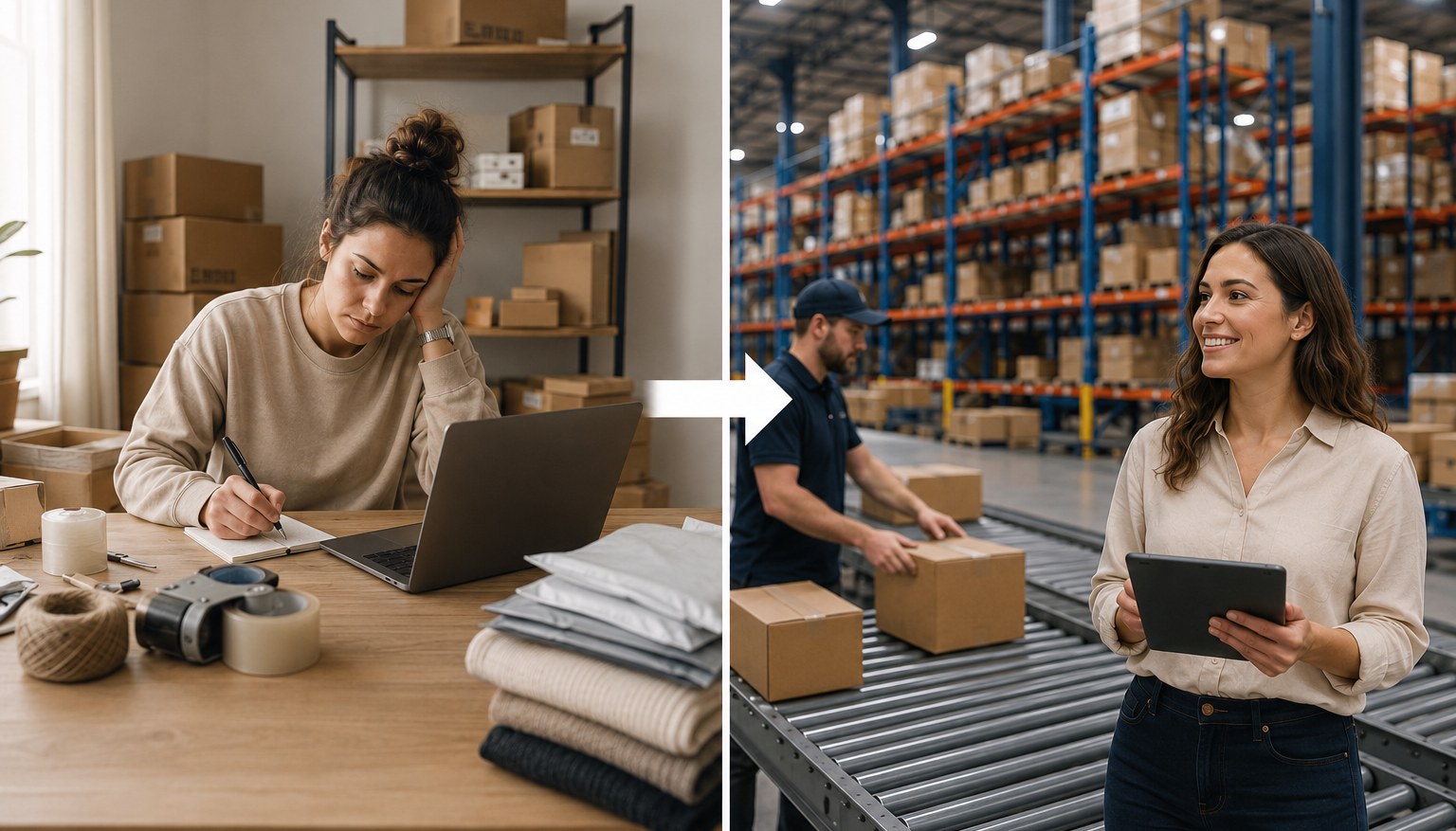
Now the incentive flipped. If you bring product in as one bulk shipment, you clear it once, pay duty once, and pay one broker. Then every customer order ships domestically from a U.S. warehouse with no customs step at all. Same duty on the goods, but you stop paying the per parcel clearance cost and you stop making your customer wait on a border.
It also fixes your delivery promise. Inventory sitting in a U.S. warehouse can go out same day and hit most of the country in one or two days by ground. That is not a small marketing upgrade. For a lot of brands it is the difference between competing and not. If you are working through what a U.S. inventory position looks like more broadly, we covered the wider picture in what international ecommerce brands must know about fulfillment before they scale.
What a U.S. 3PL actually solves, and what it does not
Being straight with you, a domestic 3PL does not lower your duty rate. Nobody can do that. Your classification and your country of origin decide what you owe.
What a U.S. 3PL does solve is everything downstream of the border:
- One entry instead of thousands. You import in bulk and clear once, rather than paying clearance and brokerage on every retail parcel.
- Speed. Orders ship from domestic stock, so customs is no longer sitting between your customer and their package.
- Returns that make sense. Returning a cross border parcel to an overseas warehouse is expensive and slow. A domestic return address is simply cheaper.
- Predictable shipping cost. Domestic parcel rates by zone are something you can forecast. Cross border clearance timelines are not.
If you import through the Pacific ports, where the warehouse sits matters on top of all of that. A building near Los Angeles, Long Beach, or Oakland means a short drayage move from the port instead of a long haul across the country before you can sell a single unit. We have two California warehouses for that reason, Woodland in the north and Victorville in the Inland Empire North.
A word on bonded warehouses and foreign trade zones
You will see a lot of content pushing bonded warehousing and foreign trade zones as the tariff answer. It is worth understanding what they actually do, because it is narrower than the headlines suggest.
Both let you defer duty until goods leave the facility and enter U.S. commerce. That is a cash flow benefit, not a discount. If the product ends up sold in the United States, you still pay. Where they genuinely earn their keep is when you are re exporting a real share of your inventory, or when you are holding large volumes for a long time and the working capital matters.
For most direct to consumer brands moving product steadily into U.S. customers, a standard domestic warehouse is the simpler and cheaper answer. Ask the question, but do not assume the fancier option is the right one.
How to actually decide
You do not need a customs consultant to get to a decision. Pull three numbers:
- What are you paying per parcel in clearance and brokerage today, multiplied by your annual order count? That is the number a bulk import removes.
- What is your real delivery time to a U.S. customer right now, from click to doorstep, including customs? Compare it to two to three days domestic ground.
- How much inventory would you need to hold here to cover, say, sixty days of demand, and can your cash position carry it?
If the first two numbers are ugly and the third is manageable, staging inventory in the United States pays for itself quickly. If you are very early, very low volume, or selling something that ships rarely and at high value, staying cross border a while longer can still be the right call, and a good 3PL will tell you that rather than sell you on making changes.
If you want a real read, send us your import volume, your product classification, and where your customers are. We will map it against our facilities and give you the plain numbers on what changes.
Talk to an Expert
If you want a straight read on your fulfillment, book a call. Thirty minutes with someone who actually runs the warehouses. We will look at your SKUs, your channels, and your import flow, then tell you plainly whether GBF is a fit.
Get a Quote



.jpeg)